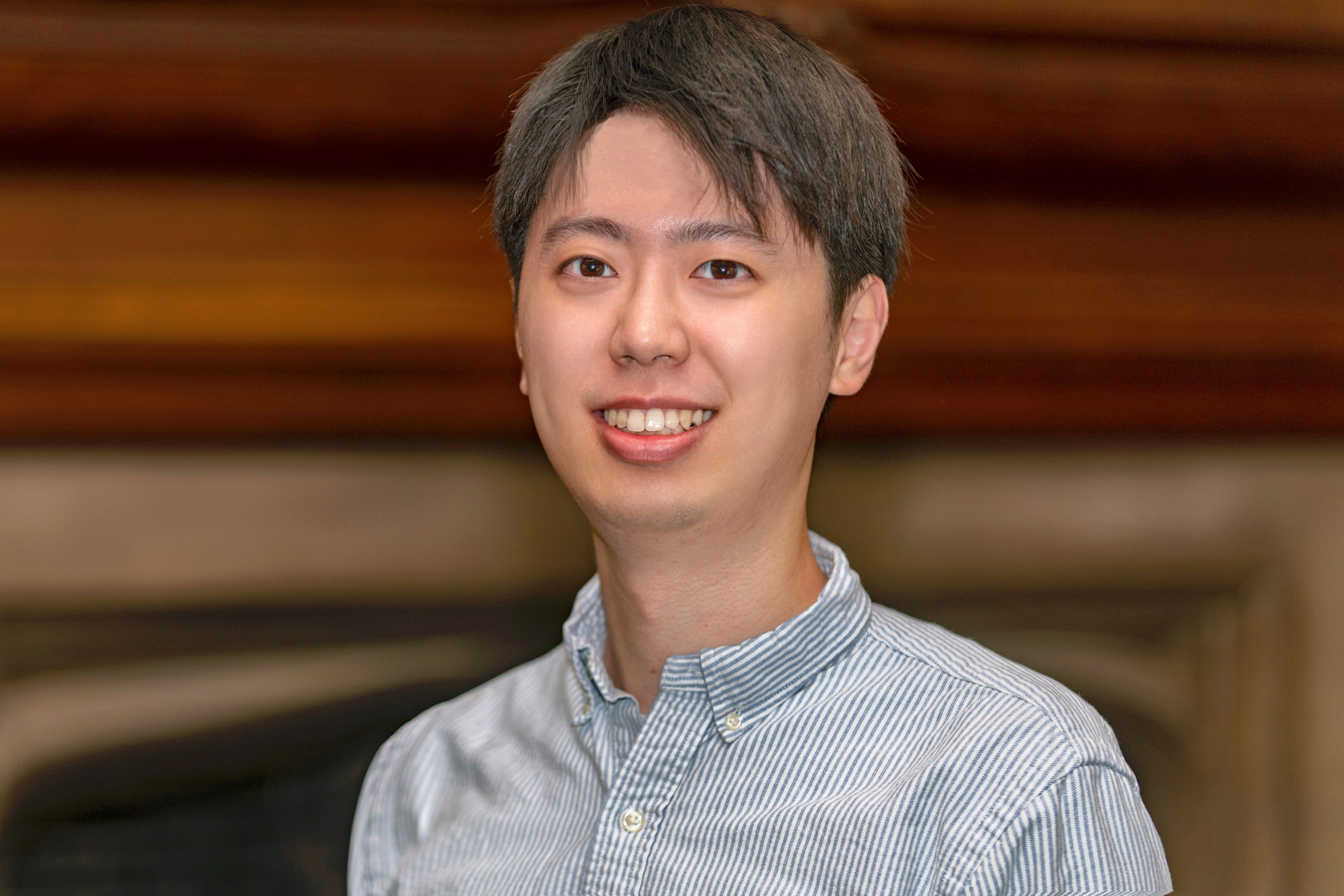
Yiang Li is a PhD student in
Sociology at the University of Chicago. He is also a Predoctoral Trainee in the NIA T32 Program
in the Demography and Economics of Aging at the
Center on Healthy Aging Behaviors and Longitudinal
Investigations (CHABLIS)
and a graduate student affiliate at the
Stone Center for Research on Wealth Inequality and
Mobility
at the University of Chicago.
Yiang is a sociologist of health and a social demographer.
His research asks how socioeconomic disparities in health
and mortality are produced over the life course, with
particular attention to when and for whom exposure to
concentrated poverty and changes in family structure shape
health from childhood into later life. He traces the
mechanisms through which health advantages and
disadvantages spill over within households, between
siblings and partners, and are transmitted from parents to
offspring. In related work, he studies how contemporary
and historical population processes shape morbidity and
mortality across cohorts and countries.
Methodologically, Yiang works at the intersection of
causal inference, demographic methods, and computational
social science. He develops causal inference methods for
time-varying exposures and effect heterogeneity,
integrating them with techniques for analyzing age,
duration, and cohort. He builds and analyzes large-scale
longitudinal and administrative data using machine
learning, record linkage, and high-performance computing.
He completed a doctoral certificate in
Advanced Quantitative Methods.
Yiang holds an MA in
Computational Social Science
from the University of Chicago and a BSc in
Social Sciences with Quantitative Methods
from University College London (UCL).
His research work has been published in
Social Forces,
Social Science Research,
Social Science & Medicine, and
Demographic Research, among other peer-reviewed journals. He also serves as
an Assistant Editor of the
American Journal of Sociology.
Yiang can be reached via email:
yiangli@uchicago.edu
and his CV can be found
here.